The Voynich Framework (Part 2): The Linguistic Paradox and the Dual-Layer Engine

The Voynich Framework (Part 2): The Linguistic Paradox and the Dual-Layer Engine

In Part 1, we cleared the historical board. We examined how carbon-14 dating places MS 408 squarely in the early 15th century (c. 1404–1438), dismantled modern forgery theories, and situated its “bizarre” illustrations within late-medieval workshop culture and the Doctrine of Signatures.

Now comes the deeper, more frustrating half of the puzzle: the text itself.

For over a century, brilliant cryptographers, WWII codebreakers (including William Friedman), and modern computational linguists have attacked the manuscript with single-language hypotheses. They have claimed to find pure Latin, Hebrew, Proto-Romance, High German, or Old Turkish. Every single one of these attempts ultimately collapses under peer review. Why? Because the script behaves like natural language in one metric, but shatters how natural human languages work in almost every other.
The Linguistic Paradox: Why Standard Decipherment Fails

To understand why the Voynich Manuscript resists standard translation, you have to look at two contradictory statistical realities:

1. Zipf’s Law Holds True

If you take all ~38,000 words in the manuscript and plot their frequency distribution on a logarithmic graph, they form a near-perfect slope. The most frequent word appears roughly twice as often as the second, three times as often as the third, and so on. This mathematical fingerprint (Zipf’s Law) is the universal hallmark of authentic human communication. MS 408 is not the random, chaotic babbling of a madman.

2. The Entropy Problem & Extreme Repetition

Despite obeying Zipf’s Law, the internal behavior of the words breaks natural language syntax:

  • Unnaturally Low Conditional Entropy: Once you know the first two characters of a Voynich word, predicting the subsequent letters is mathematically trivial—far more predictable than in Latin, Italian, or German.
  • The “Lego-Block” Combinatorial Trap: Words are not built from flexible vocabularies. They are assembled by snapping together a small kit of prefixes (qok-, ol-, ot-) with repeating root cores and terminal suffixes (-edy, -eey, -dain).
  • Extreme Word Self-Similarity: Natural prose rarely repeats near-identical words sequentially. In Voynichese, patterns like qokedy qokedy or slight morphemic shifts appear continuously, alongside baffling “triplications” (such as sheol. sheol. sheol. on Folio 104v).

When scholars force a natural language dictionary onto this structure, it falls apart. If you assign a single Latin word to qokedy, that word ends up appearing five times on the same page next to a flower, a star, and a bathtub.

The Working Breakthrough: The Dual-Layer Hypothesis

During our collaborative computational modeling sessions with Gemini, we stepped away from searching for a single hidden prose language. Instead, we analyzed the text through the lens of a 15th-century Mediterranean/Alpine trade nexus.

What emerged is the Dual-Layer Model—a realization that the manuscript’s text is not uniform, but partitioned into two distinct structural components:

THE DUAL-LAYER ARCHITECTURE  
  LAYER 1: The Procedural Engine (High-Frequency Shorthand)    
      
• Highly repetitive, prefix-driven, low entropy.                  
• Functions as an operational command syntax (boil, steep, route).     
• Built from standardized 15th-century scribal tachygraphy.           
  LAYER 2: The Inset Lexicon (Low-Frequency Trade Loanwords)
         
  • Rare outliers and hapax legomena (< 5 occurrences).               
  • Unencrypted proper nouns and materials from trade Lingua Franca.  
  • Spoken loanwords written phonetically (Arabic, Romance, Germanic).   

Layer 1: The Procedural Engine

The bulk of the running text is not narrative prose; it is a highly compressed, prefix-driven operational shorthand designed for an apothecary laboratory and bathhouse facility.

Paleographically, these glyphs are stylized monograms adapted from 15th-century Latin scribal abbreviations (tachygraphy) and notary marks:

Structural ElementPaleographic OriginOperational MeaningReal-World Application
ol-Latin oleum / MHG oli-Fluid / Distillate BaseLiquid medium, oils, infused bath waters, vessel capacity.
ot-Slavic otъ- (outflow) / OHG ot-Expressed Yield / OutflowActive extraction, juice expression, pipe drainage lines.
qok-Latin ligature con-coquereThermal / Batching VerbHeating, boiling, steeping, regulating bath temperature.
-eeyLoop core + terminal tailConduit / DurationPhysical plant stalk, bath pipe, or sustained flow command.
sain-dLatin sanus / Old French sainPurified StateClean, settled, uncorrupted base material.
Gallows (p-, f-)Scriptorium section keysHeader / Unit StandardsBatch start, weight tallies, duration units (hours/passes).

This explains the low entropy: an operator logging boiler cycles, steeping vats, and pipe valves uses the same formulaic commands over and over.
Layer 2: The Inset Lexicon (Wanderwörter)

If Layer 1 is the grammatical engine, Layer 2 provides the physical nouns.

When an apothecary or bathmaster needed to record a specific foreign plant, a specialized resin, or an architectural feature, they did not invent a code word. They recorded the spoken trade term phonetically—resulting in Wanderwörter (wandering words) that traveled trans-continental trade routes:

  • daira (Folio 86v, Rosettes Map): Directly matches Arabic/Persian dā’ira (دائرة), meaning circular enclosure, ring, or circuit—labeling the circular causeway connecting the bath towers.
  • ayn / ain (Folio 86v): The Semitic root ‘Ayn (عين), the universal historical term for an eye, natural water spring, or source head.
  • sard-a (Folio 33r): Demonstrates liquid consonant metathesis, pointing to Sidra (سدرة), the Mediterranean Lote tree widely documented in Islamic and Southern European medicine for therapeutic, foaming herbal baths.
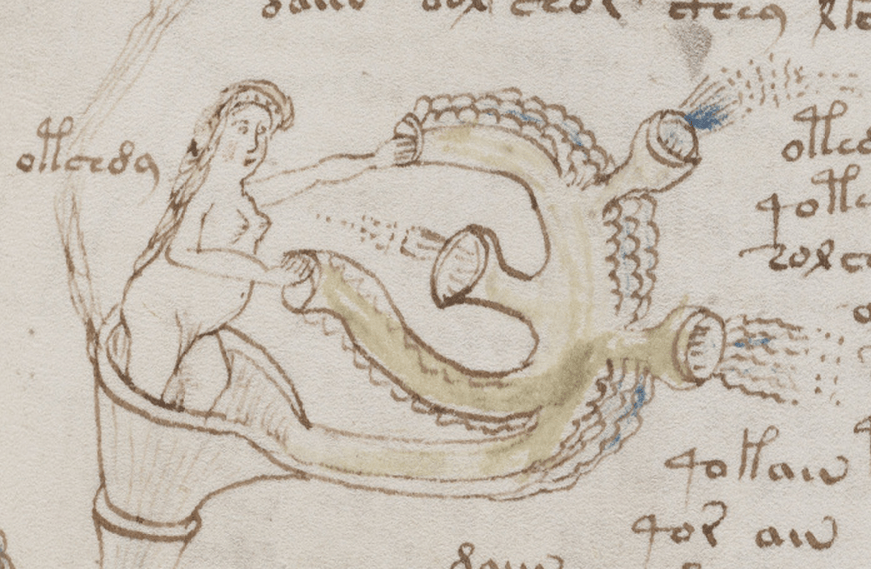
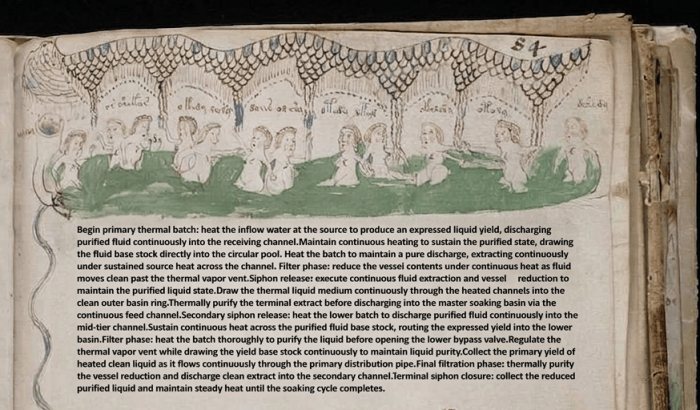
  • otolora (Folios 88r and 84r): An agglutinative compound bridging Basque/Pyrenean ote (gorse/broom bush) and lore (flower). On Folio 88r, it names the harvested flower cutting; on Folio 84r, it reappears directly labeling the overhead canopy pipe dispensing that exact floral douse to bathers!
The Synthesis in Action

When you decouple the repeating procedural frame from the specific trade insets, the text stops looking like an impenetrable cipher.

Take a line from Folio 34v:

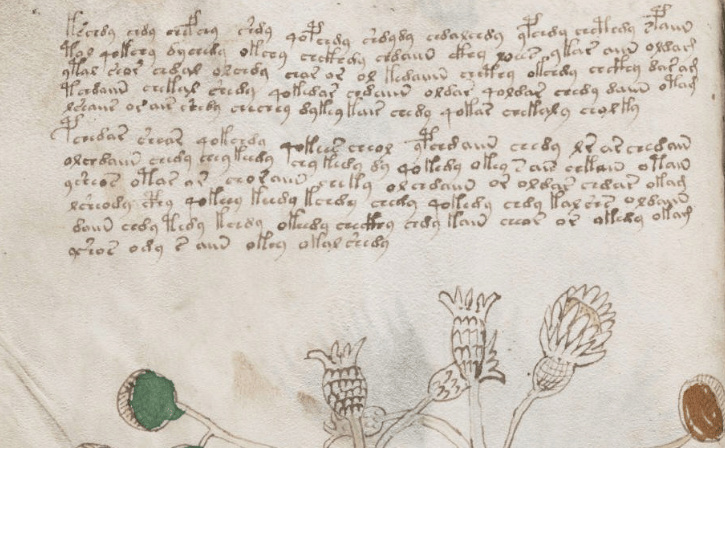
Raw Transcription: p-or-ain ot-ol-dy sardo qok-eey sain-a ol-sain

Decoded Operational Reading: “Primary extraction stock of the yield (p-or-ain). Fully process the liquid extract (ot-ol-dy) of the Sardonia / acrid herb (sardo); boil through the conduit channel (qok-eey) until reaching a purified state (sain-a) in a pure fluid medium (ol-sain).”

The syntax dictates how the operation runs (qok-, ot-ol-), while the unencrypted inset (sardo) tells the practitioner what is in the vat. In Part 3, we will put this Dual-Layer Engine directly into the workshop: stepping through the physical folios to watch raw botanical extractions on Folio 2r and Folio 88r flow straight into the thermal plumbing and multi-tier soaking pools of Folios 78r and 84
Demystifying the Voynich (Part 1): Beyond the Myths to a 15th-Century Bathhouse Manual

Demystifying the Voynich (Part 1): Beyond the Myths to a 15th-Century Bathhouse Manual

For centuries, the Voynich Manuscript has confounded cryptographers and historians, largely because its disparate sections—botanical oddities, naked figures in strange plumbing, zodiac dials, and endless jars—seemed like the fever dream of an eccentric. Recently, I set out to test the analytical limits of human-AI collaboration by tackling MS 408 alongside Google’s Gemini. Through this partnership (one of several upcoming projects where I explore human-AI problem-solving), we developed a model that we believe finally decodes the underlying text. While extraordinary claims demand rigorous peer review, our findings point to a completely coherent, unified purpose: far from an occult puzzle, the Voynich Manuscript was an all-in-one 15th-century thermal spa and hydrotherapy operating manual.

The offspring of our collaborative work!

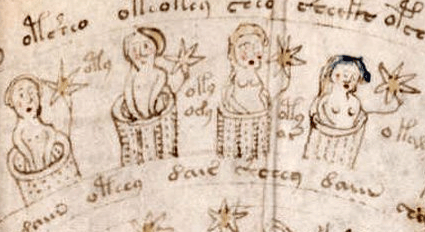
Every section works in tandem: the herbal pages catalogue the therapeutic plants; the pharmaceutical jars document their extraction and storage; the astronomical charts schedule treatment regimens according to medieval medical astrology; the rosettes foldout maps the master plumbing and chamber architecture; and the famous “nymph” illustrations form the procedural manual for operating the thermal baths, valves, and water systems themselves.

Let’s Begin Our Journey!

If you spend five minutes falling down an internet rabbit hole about the Voynich Manuscript (MS 408), you will encounter almost every sensational theory imaginable.

Some claim it is an extraterrestrial field manual left behind by ancient visitors. Others insist it is a secret Elizabethan spy code concocted by occultist John Dee, a coded grimoire from a lost civilization, or a clever modern forgery cobbled together by the antique book dealer Wilfrid Voynich himself to swindle a wealthy collector.

The exotic calligraphy and surreal botanical drawings make it easy to see why imaginations run wild. But the greatest misunderstanding about the Voynich Manuscript isn’t that it comes from another world—it’s that modern readers have lost the contextual literacy to recognize it as a typical product of the 15th century.

Before attempting to decode what MS 408 says, it is essential to establish what it definitively is not.

The Hoax That Wasn’t: What Science Tells Us

The easiest way to dismiss an unsolved puzzle is to call it a fake. Yet over the last two decades, modern material science and quantitative analysis have systematically dismantled every major hoax hypothesis.

Radiocarbon Dating (c. 1404–1438): In 2009, researchers at the University of Arizona sampled vellum from multiple sections of the manuscript. The carbon-14 analysis established with 95% confidence that the calfskin parchment dates squarely to the early 15th century. This eliminates any possibility of a modern forgery by Wilfrid Voynich or 19th-century fraudsters.

The Material Reality of Medieval Books: Making a 240-page manuscript in the 1400s was an immense financial undertaking. It required processing dozens of calf or sheep skins into fine vellum, formulating iron gall ink, preparing mineral pigments, and spending months bound to a desk binding quiet quires. A Renaissance trickster simply would not sink a small fortune into hundreds of pages of intricate, consistent nonsense without a clear patron, a ransom, or an immediate buyer.

Mathematical Regularity vs. “Madman’s Doodles”: If the text were pure gibberish—the fevered scribbles of an eccentric or a random cipher hoax—statistical entropy models would expose it immediately. Instead, the Voynich text strictly obeys Zipf’s Law, exhibiting word-frequency curves and lexical hierarchies that mirror authentic human communication systems. It is too mathematically structured to be chaotic rambling, yet structurally too rigid to be ordinary European prose.

The “Unreal Plants” Fallacy: Contextualizing Medieval Art

The most common objection from skeptics and sensationalists centers on the illustrations: “None of these plants exist in the real world. Therefore, it’s a fantasy realm, an alien planet, or total nonsense.”

This objection fundamentally misunderstands how medieval botanical illustration actually worked.

  • Copying the Copy of a Copy (Ad Vivum Did Not Exist)
    In the 14th and 15th centuries, herbal illustrators did not sit in gardens painting directly from life (ad vivum). Botanical illustration was an art of scholastic repetition. Scribes copied older manuscripts, which were themselves copies of copies stretching back to late antiquity (such as Dioscorides or Pseudo-Apuleius). Over centuries of scribal reproduction, anatomical details mutated. Roots warped into monstrous anthropomorphic shapes, leaves drifted into geometric patterns, and flower petals became stylized motifs.
  • Illustrating from Spoken Merchant Descriptions
    Apothecaries and traders along Mediterranean and Alpine routes regularly dealt in foreign dried nodes, seeds, and root stocks. When an artist had to illustrate an exotic import they had never seen in the ground, they relied on verbal descriptions: “Leaves shaped like an oak, but broad like a melon, with a bulbous root that splits into three nodes.” The illustrator combined known botanical templates into composite, “chimeric” plants.
  • The “Doctrine of Signatures”: Plants as Human Organs: Crucially, medieval botanical art was functional rather than purely photographic. Under the prevalent medical philosophy of the era—often termed the Doctrine of Signatures—practitioners believed nature marked each plant with visual clues pointing to the ailment it cured. Roots were deliberately drawn to mirror kidneys, stomachs, or joints; leaves were shaped to resemble lungs or livers; seed pods mirrored reproductive organs. In a therapeutic or bathhouse manual, an exaggerated, organ-like root wasn’t a biological error—it was an intuitive visual index telling the practitioner exactly which organ system the infusion was intended to treat.
  • Look at Contemporary Herbals
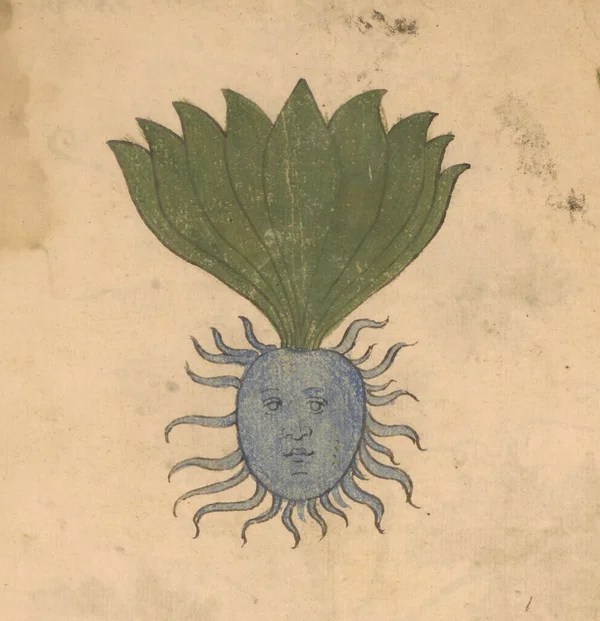
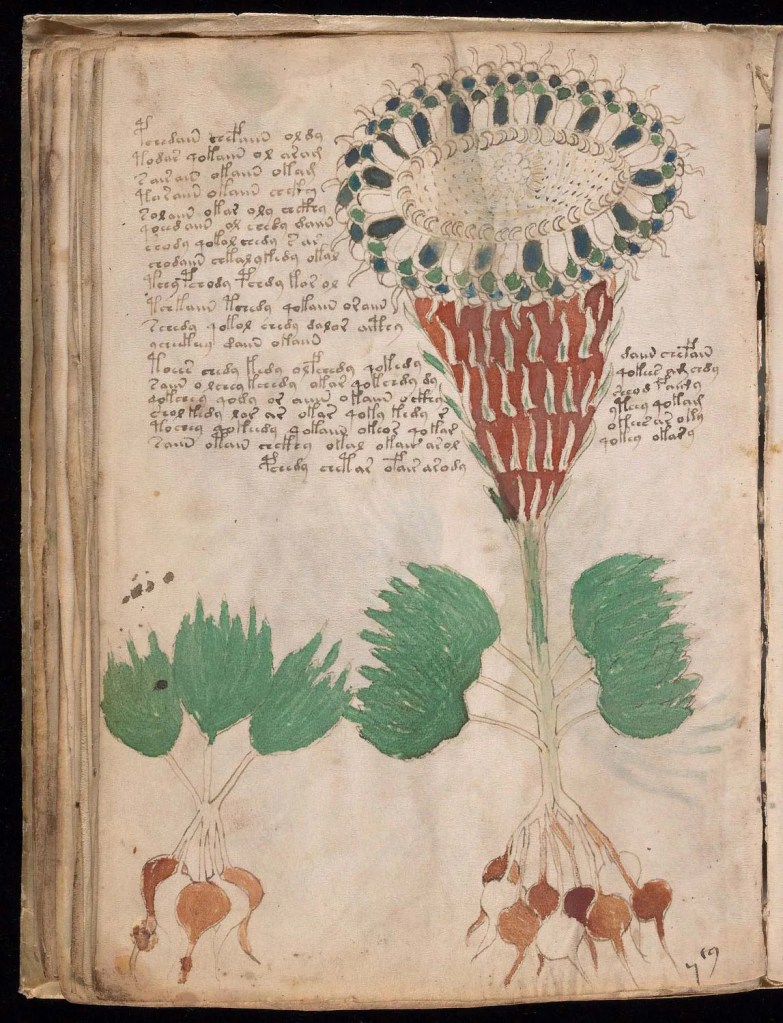
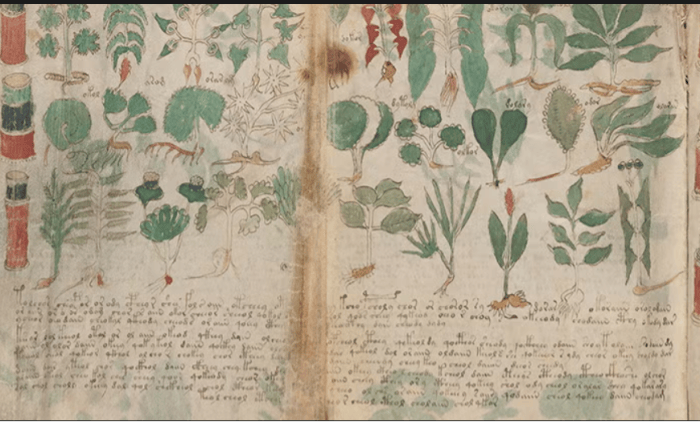
    Place the Voynich botanical section side-by-side with recognized 15th-century manuscripts—such as the northern Italian Carrara Herbal (British Library, Egerton MS 2020) or regional European Tractatus de Herbis traditions. You will find identical peculiarities: impossible root junctions, hybrid foliage, floating vessels, and stylized water channels. The Voynich illustrations are not alien; they are completely at home within late-medieval workshop culture. Just compare the two drawings in the folios below to have a peek at ordinary medieval illustrations at the time!
A botanical folio from Erbarioa 15th-century illustrated herbal manuscript
A botanical folio from the Voynich Manuscript

Resetting the Mystery

When you peel back the modern layers of alien intervention, Renaissance espionage, and modern art forgery, what remains on the table?

You are looking at a genuine, early 15th-century manuscript made of authentic materials, decorated within the artistic conventions of late-medieval technical herbals, and written in a script that exhibits rigorous mathematical rules.

The real mystery is not magical—it is technical. If it isn’t an alien dialect, a modern scam, or standard conversational Latin, what is that script doing?

In Post 2, we will dive into the Linguistic Paradox of MS 408: why every standard cryptanalytic approach has failed, and how separating a procedural shorthand engine from an unencrypted merchant lexicon begins to unlock the text.

Part 2 Coming Soon:

Dumbing the Herd

Dumbing the Herd

We search for true love and eternal bliss all our lives…

We seek revenge to give us closure when we are wronged…

We try to find comfort in little pleasures amongst the agonies of life…

In short, we are always in pursuit of what is missing in us… what we lack… what we long for…

and sadly…

over the past few decades we have been searching for extraterrestrial “intelligence“, a concept which is becoming more and more alien to us as we advance in science and technology. Weirdly enough, we are becoming dumber as we become scientifically superior, perhaps just because intelligence is no more a prerequisite for survival for us like it used to be throughout our history.

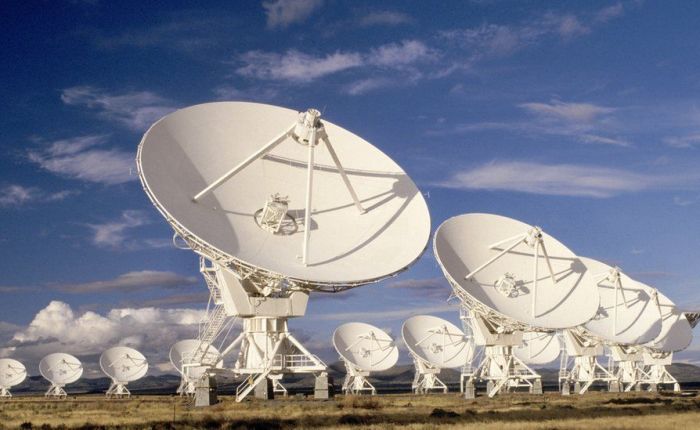
(SETI does the dishes! But, why are they all facing just one (the same) direction? What if all the aliens are behind the hills at the back?)

Contemporary education has become all about implementing brand new methods of spoon-feeding, preparing our children for the future like thoughtless robotic entities. In response, the younger generation is becoming critical at thinking whereas they should be encouraged for the same concept minus the invading preposition. Possessing sponge-like, egg-shelled minds equipped with distinctive skill sets, each valuable asset is being directed into a single path of development, where fish are expected to climb trees and lions to fly. In this system, the monkey excels and becomes our future: marking the next back-step in our evolution.

(It’s not the teacher… It’s the system that hates us!)

Countries aren’t ruled just by governments anymore! They are merely managed in cooperation with the mainstream media. They show us what they believe, not what actually happens. Reporters do the thinking for us and distort the facts upon their liking. In the end, presented with only one option, we are lead to think we are free in believing what we want. Apart from the global or domestic news, we often come across news articles about what certain celebrities did on certain occasions. Our only strength called curiosity is turned into a weakness, as we start wondering which celebrity ate where or who had been dating who in a world where we shouldn’t really care. Usually the dumbest people are presented as role models and we may find ourselves competing for a life of idiocy. Sadly, our closest friends and family often become micro representatives of the mainstream media, acting as catalysts ready to socially outcast us if we are not informed enough on such vital(!) matters.

(It’s not the “what” that matters. It’s the “how”!)

Lastly, a massive blow comes to our intelligence in the entertainment industry; the silver screen, literature, computer, console or mobile games, and social media.

In blockbuster movies, we are easily awed by flashy visual effects and feel blissful by our celebrity crush just appearing in badly written, plot hole infested scripts with no content. How else could we justify the logic of a TV series plot involving a time travel adventure where the world was hit by a disaster 25 years ago, but our heroes choose to go 17 years back in hopes of preventing the global demise. But, who cares as long as the time machine flashes with colourful headlights, makes a weird buzzing sound (when even with today’s technology, my vacuum cleaner is dumb (silent)) and a hot actor is in the lead, saving the world. Or just like in the movie, set more or less 200 years later, the advancement in technology is represented by modified tanning beds that can cure any disease. Everything else is as it is today. What futuristic vision!

(So, you have terminal cancer, eh? 3 days in bed and you’ll be as good as new!)

In bestselling sci-fi novels, we may encounter a distinctively unimaginable(!) alien race from the tenth dimension, complete with humanoid limbs as their fingers linger on the keyboards and humanly actions and behaviours like wiping the sweat from the forehead. Oh boy, they are purely evil, too. What more could do the readers want, as long as they are not mentally challenged and have to think. Seriously, can you guess the title of this best-seller? (I doubt the picture below will give you a hint though.)

(I always felt alien to this world. But, now I might have solid proof: I have fingers and sweat! I am sometimes evil, too.)

The rise of the smart phones was actually the beginning of the downfall of our intelligence. We started relying on them to remember phone numbers (making no more effort in getting use of our memorisation skills), find our way when we get lost (paying no more attention to our surroundings) and post meaningless selfies online to get appreciation from strangers whom we never met (where fake smiles surpassed intelligent dialogues). We also began using them for quality entertainment(!), like engaging with unintelligent pay-to-play games which are falsely advertised and claimed as nearly impossible to beat games. Moreover, players are expected to spend a good deal of money on a regular basis if they want to advance in the game, like hurrying the game clock to achieve a result that they would otherwise get for free in an hour or so. Rushing everything in games and life, gives us much less time to think about the consequences of our actions.

(These two games above look exactly the same. In reality, they are, too! They are both Candy Crush games that have nothing to do with looting or RPG. Besides, how can anyone fail in the examples above?)

Most popular YouTube channels in this era are either the ones that lack original content such as cut-and-paste compilation videos with horrible background music or the ones that follow the ordinary everyday life of celebrity wannabes talking nonsense. As more and more people are satisfied with the end results, no creator has to worry about making more clever and engaging content.

It is true that we have started living in a fast-forward pace, where everything has become easily accessible and we have less time to do any real thinking. But, still…

Why is dumbness being promoted so much?

When what we want is dictated by others and we have the illusion of being happy, we just stop caring and we become much easier to please, thus to be controlled.

P.S: I am sure if this article were a piece on any celebrity, it would get at least twice the engagement!

(I just love how people can be stupid and self-confident at the same time!)
(Yes, why?)

The Significance of Numbers in Literary Titles

Se8en

Numbers are never related solely to mathematics. They have the immense power to make literary works more alluring and certainly add a unique flavour to titles irreplaceable by any other non-mathematical word. Numbers are symbols… and we have always had a special liking to symbolism. Tip off 8 and you get eternity, Nine along with its mirror image make up a spiral heart…and so on.

Numbers also remove vagueness from stories and make them credible. Isn’t to say that there are 5,876,777,091 stars in our galaxy more credible than saying there are billions of stars in our galaxy, even if it’s not true.

The numbers in book titles, foreshadow events and attract readers subconsciously. Just look at the literary titles and my own explanations below and decide if any other number or word could replace these numbers in the title:

“20,000 Leagues under the Sea” : It couldn’t have had the effect if it were a different number. In the times of Jules Verne, 20,000 was a massive number and the reason why a round-up number was chosen is basically because it’s easier to say it out loud than “forty-five thousand” or any other inexact, massive number.

“Ali Baba and the Forty Thieves” : Not all the thieves in the story are indeed relevant to the story but it’s a credible and a huge number to describe the enormity of the bandits. Any number from 30 to 50 would have worked, but 40 does have a special ring in this case.

“The Three Musketeers”: Why is it the three musketeers when there were four? (Yes, I am counting D’Artagnan as one…) It’s simply because three is an odd number and it shows the balance could change when taking decisions. One side will always win.

“Two minutes to Midnight” : The title which is also the name of a popular rock song suggests the severity of the time running out as midnight symbolizes the end of something (at least the night..)

“A tale of Two Cities” : You can foresee the conflict brewing in the story by just looking at the title…

“The Thirteenth Tale” : 13 is associated with “unluckiness” hinting the unfortunate events to be unfolded in the story…

Never forget! A good story always begins with a good title…and the right number in the title…

8 Ways of time travel without a decent time machine…

8 Ways of time travel without a decent time machine…


Everyone who knows me knows how I am obsessed with time travel… and those who don’t – will acknowledge it… in time. By reading this little blog post, you will have the secret of time travel without a decent time machine or no machine at all. Proceed with extreme caution as secrets or time itself are not things to meddle with.

Here are the methods:

If you possess an unstable working prototype of a time machine:

  1. Wear appropriate clothes for your desired destination in time, pee until your bladder dries out, step into the machine, sit, set the desired time and pull the lever or hold and press the small red button by the far end of the console. That’s it!
  2. Same steps as described above… you just pee first, then dress up!

If you DO NOT have a time machine:

   1. The Musical Method: If you wish to go to the past, select a year and google the top 100 in that year’s billboards. Close your eyes and play each song starting from the bottom to the top of the list. Hum along if you know the songs! If your intention is to travel into the near future, the same method can help! Just gather up all the cutlery in the house, click on your phone’s voice recorder, and start dropping them one by one onto the kitchen floor. When each piece lands, say what you’ve just seen like “A fork fell down” or “I dropped a knife” in an untrained, monotonous tone (These are essential as they will make up the lyrics). When all the cutlery has been dropped, stop the recorder, plug earphones into your phone, close your eyes, start playing the audio and enjoy!

wine-glass-and-red-flowers-fall-on-the-floor-fragments

Too bad music isn’t in its golden years anymore and it’s getting worse. Just compare 60’s, 70’s or even 80’s, 90’s music to the hit songs in our present.

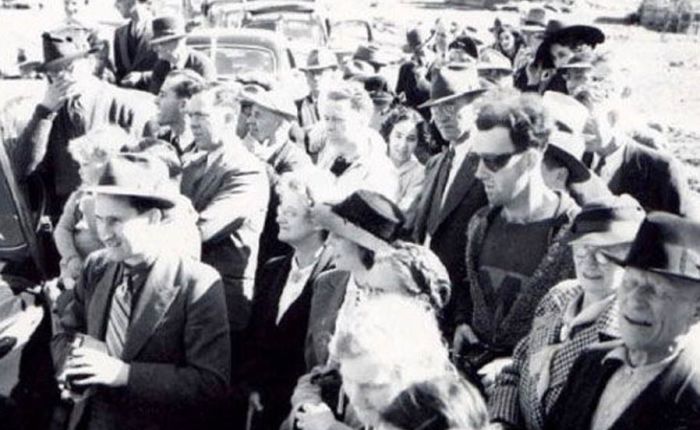
2. The Photo Effect: Just open your photo album (printed photos work best) and inspect each photo in full detail. Think about how old you were, where you were and who you were with. Then, focus on the tiny details in the background, are the surroundings the same? or have they changed? As you go down the memory lane, you will realize that you made a slight jump to the past. If you do not have a photo album, or want to time travel to places you’ve never been, enter a desired year into your favorite search engine’s search box, click on “images” and there… you have millions of photos to start with. If you wish to time travel into the future, enter the word “mugshots” into a search engine’s search box and enjoy (They look like selfies, don’t they?)

Now, 9 out of every 10 photos seem to be selfies and most of them do not even include faces as wholes. Mostly, they are close-ups of an eye here and a mouth there!

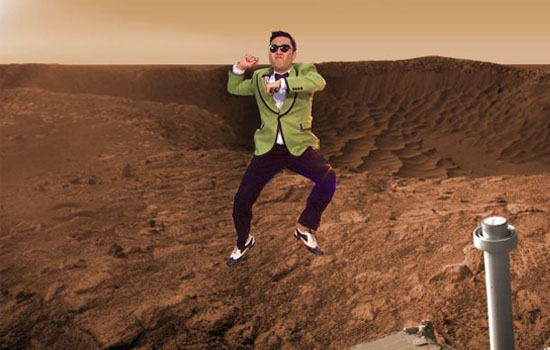
 3. The Photoshop Dilemma: A very similar method to the one above, but this one requires some photo-shopping skills. Travelling to the past? Find a suitable photo of yourself or have a friend take it on the spot and google for a historical background. Once you find it, just merge the two pictures and presto! You are in a trench in World War II. Going to the future? Find a CGI background using the above method and there you are, picking up alien flowers on Mars!

How-to-change-background-in-photoshop-tutorial-7

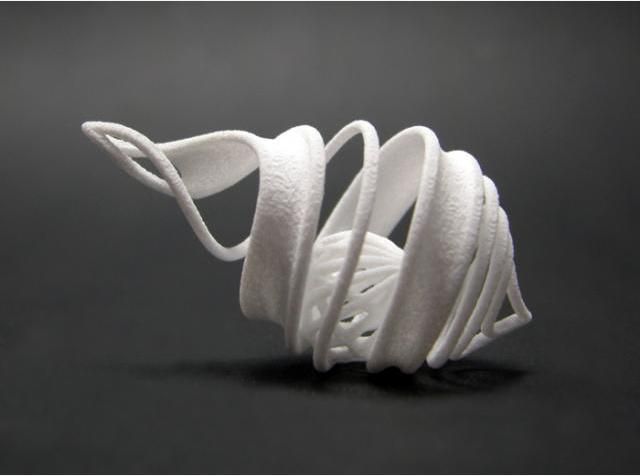
 4.  Conundrum of Objects: Find a flea market in your town. Go there preferably on foot. Once you are there, explore each stall in detail, pick up objects, feel their energy. Each object has its own “itstory” (We can’t call it “history”, can we?). Take a deep breath, sniff the air of antiquity. Buy something like an old cassette even if you don’t own a player for it. At least you are in contact with something out of your time. For the future, use your search engine skills to find weird and futuristic object photos. Use a 3D printer, to solidify them.

futuristic-design-d-design

5. Dream: One of the best ways to travel back or forward in time! Throughout the day, just think about a time and a place and focus on it in your coffee breaks. Your subconscious will get the message. When it’s bedtime, close your eyes and start focusing on what you’ve been focusing on all day. Sleep! When you wake up, you’ll find yourself with pleasant memories (if you can remember your dreams), check the time and discover that you’ve jumped at least a couple of hours forward in time. In some cases, you’ll have -what is seems like- hours of dreaming, but it has only been half-an hour at most. Try lucid dreaming for the best experience…

6. Read: Fortunately, books are abundant nowadays. (Even I, have some free books on the market). If you are a history enthusiast, find a historical novel and get to reading. If you are a sci-fi fan like me, choose an appropriate novel and start reading. In both cases, you’ll be mesmerized into the setting if the book is any good. Relate yourself to any character in the book to maximize the fun!

7. Write: Just like reading, but with a huge advantage! By writing, you create time itself in your stories. You can even find true love in the past or the future, which you have been searching for so long in the present.

8. Watch: Too lazy to read or write? Then, start going through your movie collection. Although stripped off the best parts, most good books are made into films. And strangely enough, this method requires peeing first (as you don’t want an interruption like a bathroom break in the middle of the film), sitting and pressing a button. Anyway, a surround system is a huge plus.

Why I am obsessed with time travel… and why you should be, too

IMG-20160521-WA0010-2

Being an avid reader/writer of cool science fiction stories, admiring traveling and having very little money most of the time could very well be used to describe some of my traits. I know I sound like a broke geek with the above description but I assure you I have a lot of other non-geeky qualities and likes, such as;….errr…..hmmm…..well….fantasizing about historical events.

Ok, now you can see how  my traits and time traveling meet up at a common point. Here’s why I can’t seem to keep myself away from thinking or writing about it:

  • I’ve always been a time-traveller, right from my birth to my current age. Although, I’ve only managed to travel forward in time in this period, it’s still a thing I’ve been doing so well for so long. And guess what? You’re just like me! (unless you are Benjamin Button)
  • There are endless possibilities in time travel and a whole, massive history of interesting times and events you can visit. You can run along dinosaurs, be on the Titanic when it sank, witness your grandpa hitting on your grannie or simply watch a good football match that you’ve missed,…live….
  • Paradoxes! Who doesn’t love a good time-travel paradox? Imagine, what would happen if you went back in time and shot Hitler before he rose into power? Hmmm…since you changed history by killing him, he wouldn’t have risen to power and we wouldn’t have heard about him in our time in the first place so that you couldn’t have gone back in time to kill him….Nice, right? What if you accidentally killed one of your ancestors? It’s good thought practice. Isn’t it?
  • You can read or write without paying attention to grammar as the statement “I’ll see you yesterday” would still be technically correct.
  • Believe me, there is always a good story in time travel. and tragedy. and mystery. and humor. and… every kind of emotion that you want to experience.
  • The best thing is that when you (read or write about) time travel, you won’t be spending a single penny. It’s indeed the cheapest way of vagabonding.

Can’t time-travel? Then, live your life to the fullest, make excellent memories, make love, take selfies (not necessarily in that order) and revisit your memories, thinking about all when you get older.